
Tenggarong – The Association of Teaching English as a Foreign Language in Indonesia (TEFLIN) held The 3rd Mahakam International Seminar in ELT (MISELT) on Thursday, May 7. Carrying the theme “Artificial Intelligence and Digital Pedagogies in Multicultural English Language Teaching,” the international seminar was conducted in a hybrid format via Zoom Meeting and on-site at Kutai Kartanegara University (Unikarta). The event served as a platform for academic collaboration involving six public and private universities in East and North Kalimantan: Muhammadiyah University of East Kalimantan (UMKT), Kutai Kartanegara University (Unikarta), Mulawarman University (Unmul), Borneo Tarakan University, Widya Gama Mahakam University (UWGM), and Samarinda State Islamic University (UINSI).
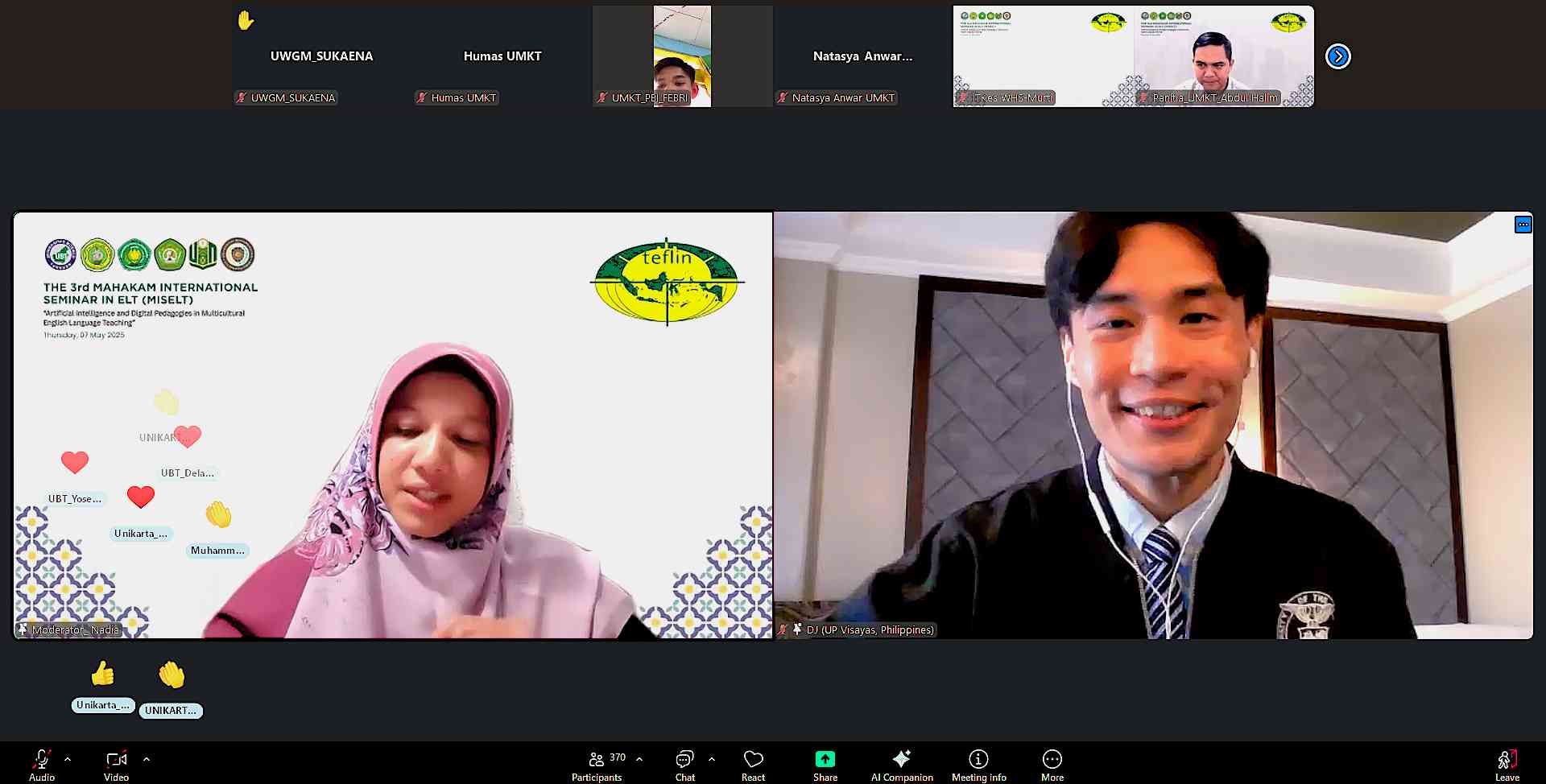
MISELT 3 2026 attracted 312 participants, including students, lecturers, English teachers, and academics from various higher education institutions and educational organizations across East and North Kalimantan. The Chair of the Organizing Committee, Fitria Meisarah, stated that MISELT serves as a forum for strengthening academic networks among universities in the region, particularly in advancing English language teaching in the digital era.
In his welcoming remarks, Unikarta Rector Ince Raden expressed his pride that Unikarta had been entrusted to host the third MISELT. “The discussions taking place in this seminar are expected not to remain at the theoretical level, but to be implemented in real-world contexts,” he said.
Meanwhile, according to TEFLIN President Utami Widiati, technological developments can serve as a bridge to address various learning challenges in multicultural environments. “This seminar will explore how technology can bridge gaps in multicultural learning,” she explained.
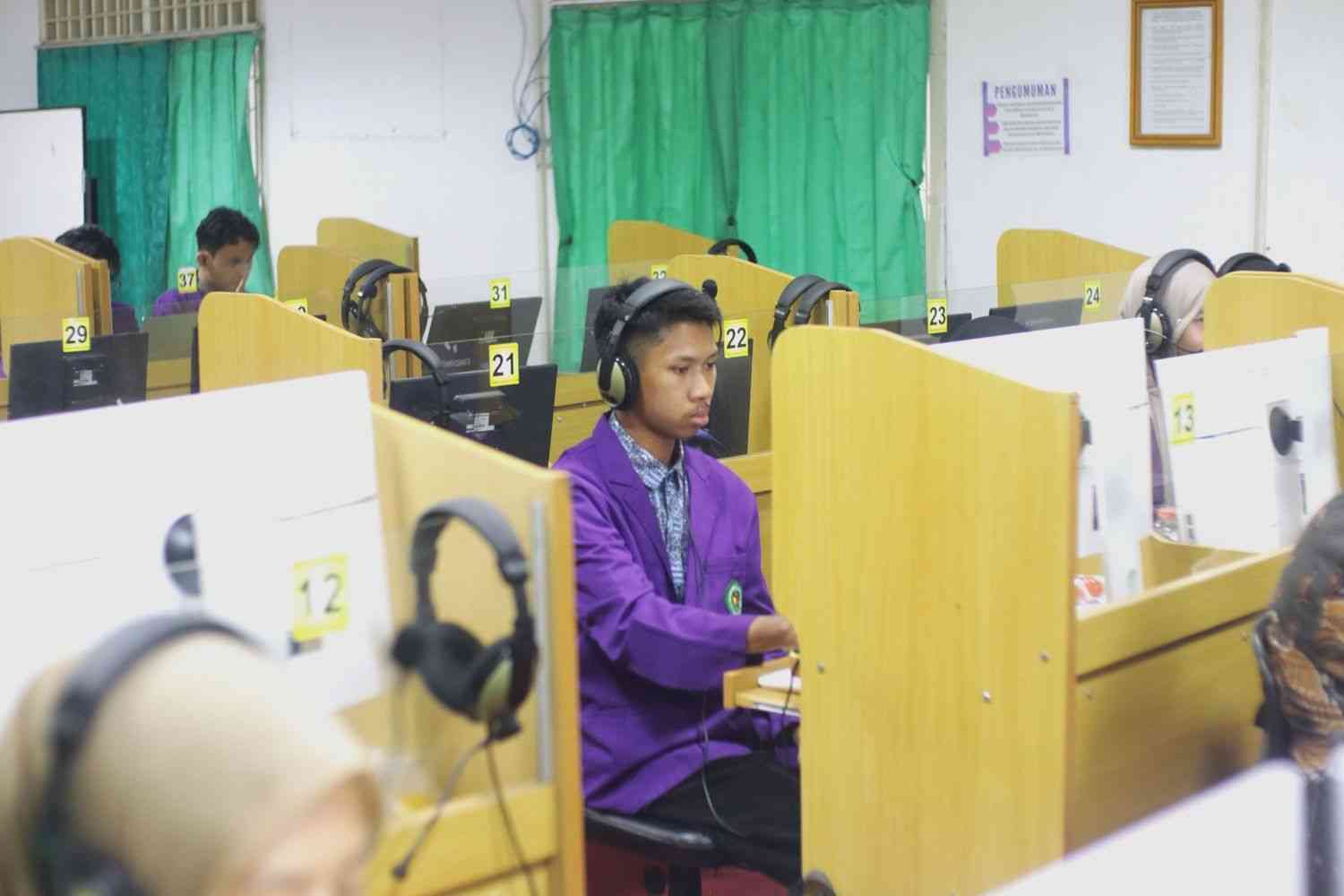
During the main session, keynote speaker Donne Jone “DJ” Panizales Sodusta from the University of the Philippines Visayas shared his experiences and research findings on the use of artificial intelligence in English language teaching. In his presentation, DJ explained that AI is now being used extensively by students for tasks ranging from grammar checking to bibliography compilation. However, he emphasized that an overly outcome-oriented use of AI can lead to information overload and diminish students’ critical thinking skills.
“Teachers must be more sophisticated than the technology because their role cannot be replaced. AI should be used to review and improve students’ work, not to take over the entire learning process,” he stated. DJ also described the current relationship between AI and pedagogy as being in a situationship phase—a state of dependency without a clear direction. He therefore advocated a shift toward assistantship, where AI is positioned as a collaborative partner rather than a substitute.
In addition to the main seminar, MISELT 2026 featured breakout-room sessions via Zoom, where participants presented their research findings. Through MISELT 2026, TEFLIN and its partner universities hope to further strengthen inter-university academic collaboration across East and North Kalimantan while promoting the wise and adaptive use of AI in English language teaching in the digital age.
Author: Raisha Azzahro
This content was originally published on Kompasiana.com under the title “TEFLIN Gelar MISELT 3, Bahas AI dan Pedagogi Digital di ELT” accessible at https://www.kompasiana.com/humasumkt/69fd2f4dc925c42c4963ea03/teflin-gelar-miselt-3-bahas-ai-dan-pedagogi-digital-di-elt
Contributor: UMKT Public Relations Office (Humas UMKT)